
When it comes to choosing a new phone, size matters—especially if you’re trying to fit it into your favorite pocket or that trendy little clutch. The iPhone 12 Pro and iPhone 13 might look like twins at first glance, but are they really the same size? Spoiler alert: they’re not exactly identical, but the differences might just be smaller than your last excuse for not hitting the gym.
Overview of iPhone 12 Pro and iPhone 13
The iPhone 12 Pro and iPhone 13 show subtle yet noteworthy differences in size and design. Both models cater to users seeking premium smartphones, but they do not share identical dimensions.
Design Specifications
The iPhone 12 Pro features a sleek stainless steel frame, offering a premium feel and aesthetic appeal. Its back consists of textured glass, enhancing grip and elegance. On the other hand, the iPhone 13 maintains a similar design language but employs aluminum for its frame, which contributes to a lighter overall weight. Front and back materials include durable ceramic shield glass in both models, ensuring robustness against daily wear and tear.
Dimensions Comparison
Dimensions highlight slight variations between the two devices. The iPhone 12 Pro measures 5.78 inches tall, 2.82 inches wide, and 0.29 inches thick. Contrarily, the iPhone 13 stands at 6.1 inches tall, 2.82 inches wide, and 0.30 inches thick. Both models weigh around 189 grams. Users looking for precise fit may observe these small differences when it comes to cases and accessories, although daily usability remains largely similar.
Display Features
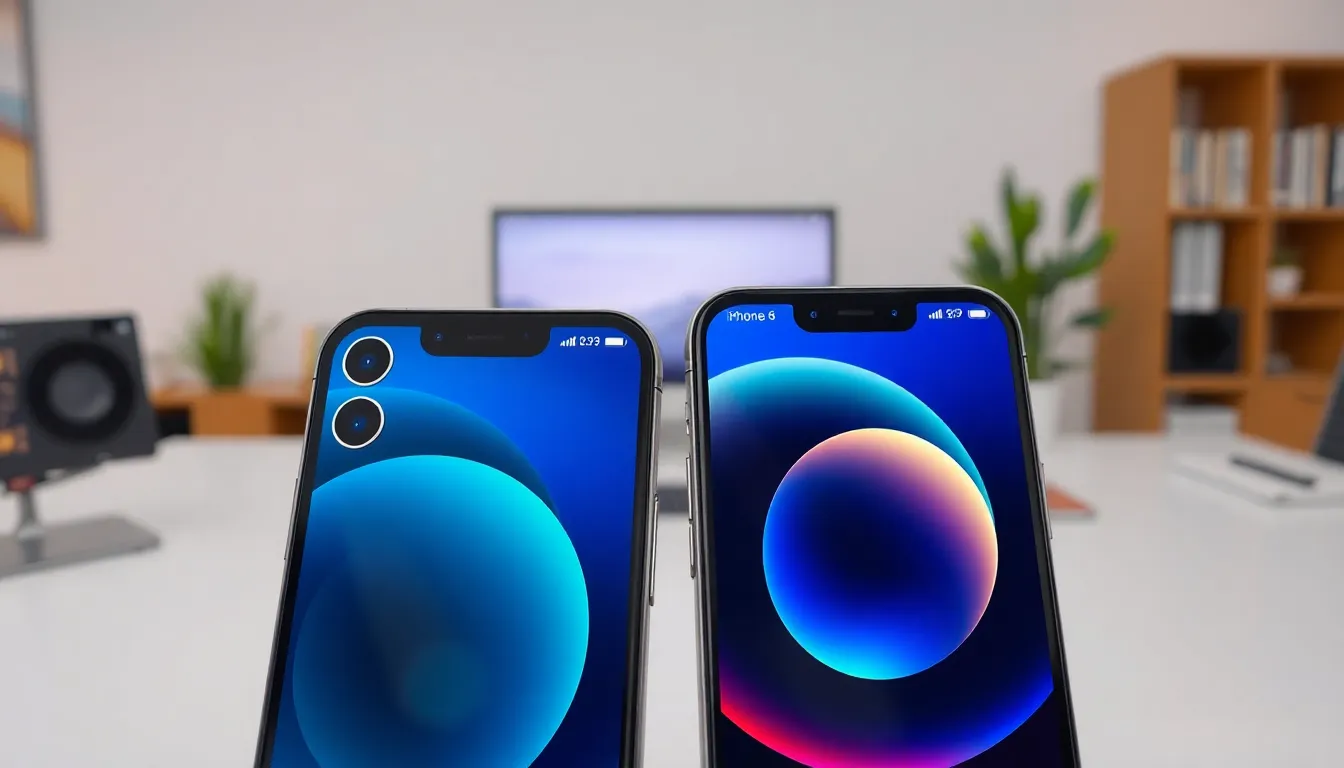
Display features play an essential role in user experience on smartphones. Both the iPhone 12 Pro and iPhone 13 offer impressive displays with high-quality visuals.
Screen Size and Resolution
The iPhone 12 Pro has a 6.1-inch Super Retina XDR display, boasting a resolution of 2532 x 1170 pixels. In comparison, the iPhone 13 also features a 6.1-inch Super Retina XDR display, delivering the same resolution. Both devices support HDR10 and Dolby Vision. Users can enjoy vibrant colors and sharp images on either device.
Notable Differences
Although both displays share dimensions, differences exist in brightness and battery efficiency. The iPhone 13’s display features improved brightness, reaching up to 800 nits for regular content and 1200 nits for HDR. Enhanced efficiency in the iPhone 13’s display contributes to better battery life during usage. Color accuracy and contrast ratios remain impressive on both screens, ensuring an exceptional viewing experience for users.
Weight and Build Quality
iPhone 12 Pro and iPhone 13 may share similarities, but their weight and build quality present distinct characteristics.
Material Comparisons
iPhone 12 Pro features a premium stainless steel frame, known for its durability and luxurious feel. Textured glass on the back adds to its elegance. In contrast, iPhone 13 opts for a lighter aluminum frame, making it easier to handle. Glass on the back retains a sleek appearance while reducing overall weight. Despite these differences, both models ensure robust construction that can withstand daily use.
Impact on User Experience
Weight influences how both devices feel during extended use. iPhone 12 Pro, weighing 189 grams, feels solid but can feel heavier after long periods. Users often appreciate the lighter feel of iPhone 13, which remains at the same weight but benefits from the different build materials. Daily usability remains similar, but preference might shift based on individual handling experiences. Both phones, despite slight weight differences, provide excellent ergonomics and comfort for various tasks.
Performance and Functionality
This section explores the hardware specifications and software enhancements of the iPhone 12 Pro and iPhone 13, highlighting their performance capabilities.
Hardware Specifications
Both the iPhone 12 Pro and iPhone 13 incorporate powerful A-series chips. The iPhone 12 Pro features the A14 Bionic chip, while the iPhone 13 benefits from the newer A15 Bionic chip. Enhanced processing capabilities present in the A15 result in improved speed and efficiency during tasks. Memory configurations differ slightly, as the iPhone 12 Pro comes with 6GB of RAM compared to the 4GB in the iPhone 13, enabling the former to manage multitasking and demanding applications effectively. Both models support 5G connectivity, promoting faster download speeds. Storage options range from 128GB to 512GB in the iPhone 12 Pro, whereas the iPhone 13 offers a new 1TB variant, catering to users needing extensive storage for apps and media.
Software Enhancements
Apple’s iOS provides a platform for both phones, enriching user experiences through regular updates. The iPhone 13 introduces new features like Cinematic mode in video recording, allowing users to create depth-of-field effects, providing a professional touch to home movies. In addition, the enhanced Photographic Styles feature in the iPhone 13 gives users greater control over the aesthetic of their images. Both devices receive timely software updates, ensuring they remain secure and functional. Performance improvements in iOS enhance battery life and system responsiveness in both devices, optimizing everyday usability. As a result, users experience seamless integration of hardware and software across both models.
Choosing between the iPhone 12 Pro and iPhone 13 involves considering subtle differences in size and design. While both models boast impressive displays and similar weights, the iPhone 13 is slightly taller and thicker, which may impact case compatibility. The shift from stainless steel to aluminum in the iPhone 13 provides a lighter feel without sacrificing aesthetics.
Performance-wise, the A15 Bionic chip in the iPhone 13 offers advantages in speed and efficiency, making it a compelling choice for users who prioritize the latest technology. Ultimately, both devices deliver exceptional user experiences, but individual preferences will play a key role in the final decision.